

Select your language

- Details
- Category: Museo
-
Also available:

"PARIS-STYLE" STOVE
 English Version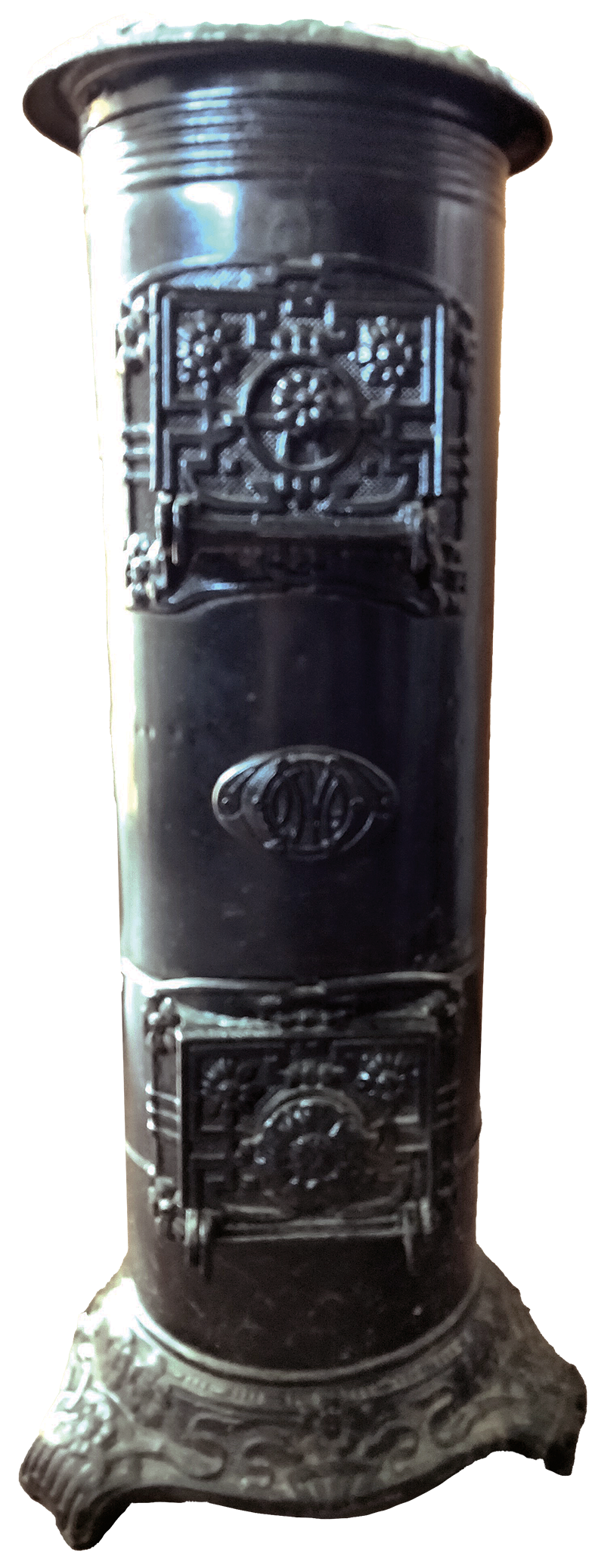
Wood-burning stove for heating third-class carriages
In the earliest railway carriages, heating was provided by special containers known as ‘heaters’, which were filled with water taken directly from the locomotive’s steam system. The water was changed by a member of staff every two hours. This was the case in first and second-class carriages, whilst in third-class carriages there was a small wood-burning stove which, when needed, the nearest passenger would take it upon themselves to feed with the few logs stacked nearby.
The ‘Parigina’ was nothing more than a small wood-burning stove, made of iron or cast iron, very heavy, which was manufactured in the early 19th century by a French factory (hence the name ‘Parigina’). The distinctive feature of this stove was that it was inexpensive, consumed little fuel and, above all, gave off a great deal of heat.
Once these types of heating had been phased out in passenger carriages, the little ‘parigina’ found a new use in mail wagons, in the postman’s cubicle, and in the guardhouses at level crossings and track maintenance posts, fuelled by pieces of sleeper that the track maintenance workers carried along the line on a trolley during the winter months.
Pubblicazioni correlate:
Biblioteca Ferrovie Arrugginite